
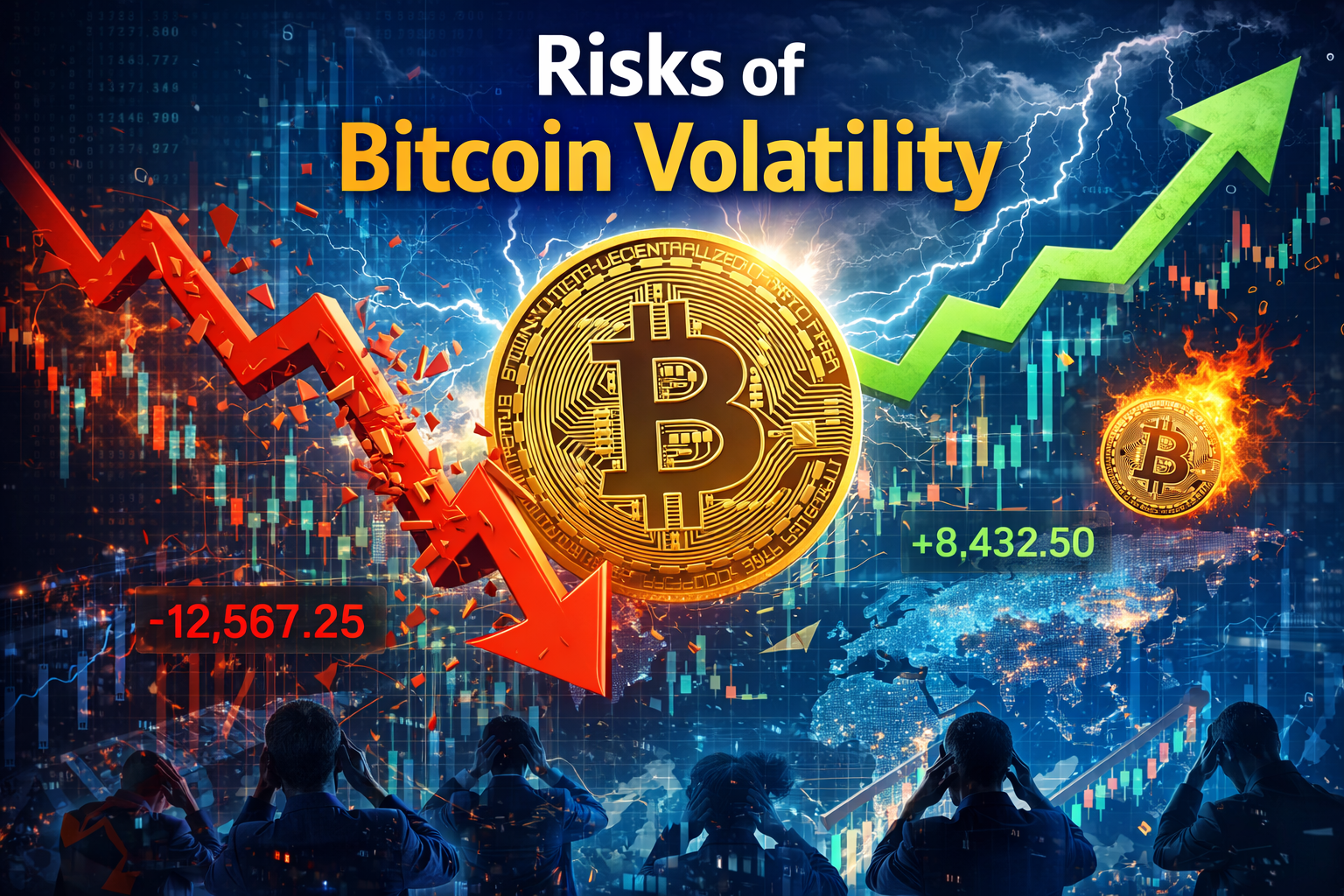
Understanding Bitcoin Volatility
Bitcoin has become one of the most talked-about financial assets in the world. While many investors see it as a revolutionary digital currency and a potential store of value, it is also known for its high price volatility. This volatility means that Bitcoin’s price can rise or fall dramatically within a short period of time, creating both opportunities and risks for investors.
Bitcoin volatility is influenced by several factors including market sentiment, regulatory news, global economic conditions, and technological developments within the cryptocurrency ecosystem. Because the cryptocurrency market operates 24/7 and is still relatively young compared to traditional markets, price movements can be much more unpredictable.
Why Bitcoin Is So Volatile
One of the primary reasons for Bitcoin volatility is its limited liquidity compared to traditional financial markets. Even though Bitcoin has a large market capitalization, it is still more sensitive to large trades that can quickly move the market.
Another factor contributing to volatility is market speculation. Many investors buy Bitcoin hoping for quick profits rather than long-term investment. This speculative behavior often leads to sudden price spikes followed by rapid corrections.
Additionally, regulatory announcements from governments and financial authorities can significantly impact Bitcoin prices. News about potential restrictions, taxation policies, or institutional adoption often causes sharp market reactions.
Risks for Investors
Investing in Bitcoin can be profitable, but the risks associated with Bitcoin volatility should not be ignored. Large price swings can result in significant financial losses, especially for investors who enter the market without proper risk management strategies.
Short-term traders are particularly exposed to volatility because prices can move rapidly in either direction. For inexperienced investors, emotional decisions driven by fear or greed may lead to buying at market peaks or selling during sharp declines.
Another risk comes from the broader cryptocurrency market itself. Because many digital assets follow Bitcoin’s price movements, volatility in Bitcoin often spreads across the entire crypto ecosystem.
Managing Bitcoin Volatility
Although volatility cannot be completely avoided, investors can reduce risk by applying several strategies. Diversifying investments across different asset classes can help balance potential losses from cryptocurrency markets.
Long-term investment strategies are also commonly used by experienced investors. Instead of reacting to short-term price fluctuations, they focus on the long-term growth potential of blockchain technology and digital assets.
Using proper risk management techniques such as setting stop-loss levels, limiting exposure, and conducting thorough market research can also help investors navigate the risks of Bitcoin volatility more effectively.
The Future of Bitcoin Stability
As cryptocurrency markets mature and institutional adoption increases, some analysts believe that Bitcoin volatility may gradually decrease. Greater liquidity, clearer regulations, and wider adoption could contribute to more stable price movements over time.
However, Bitcoin will likely remain more volatile than traditional assets for the foreseeable future. Investors should always approach cryptocurrency markets with caution and ensure they fully understand the risks involved before investing.
